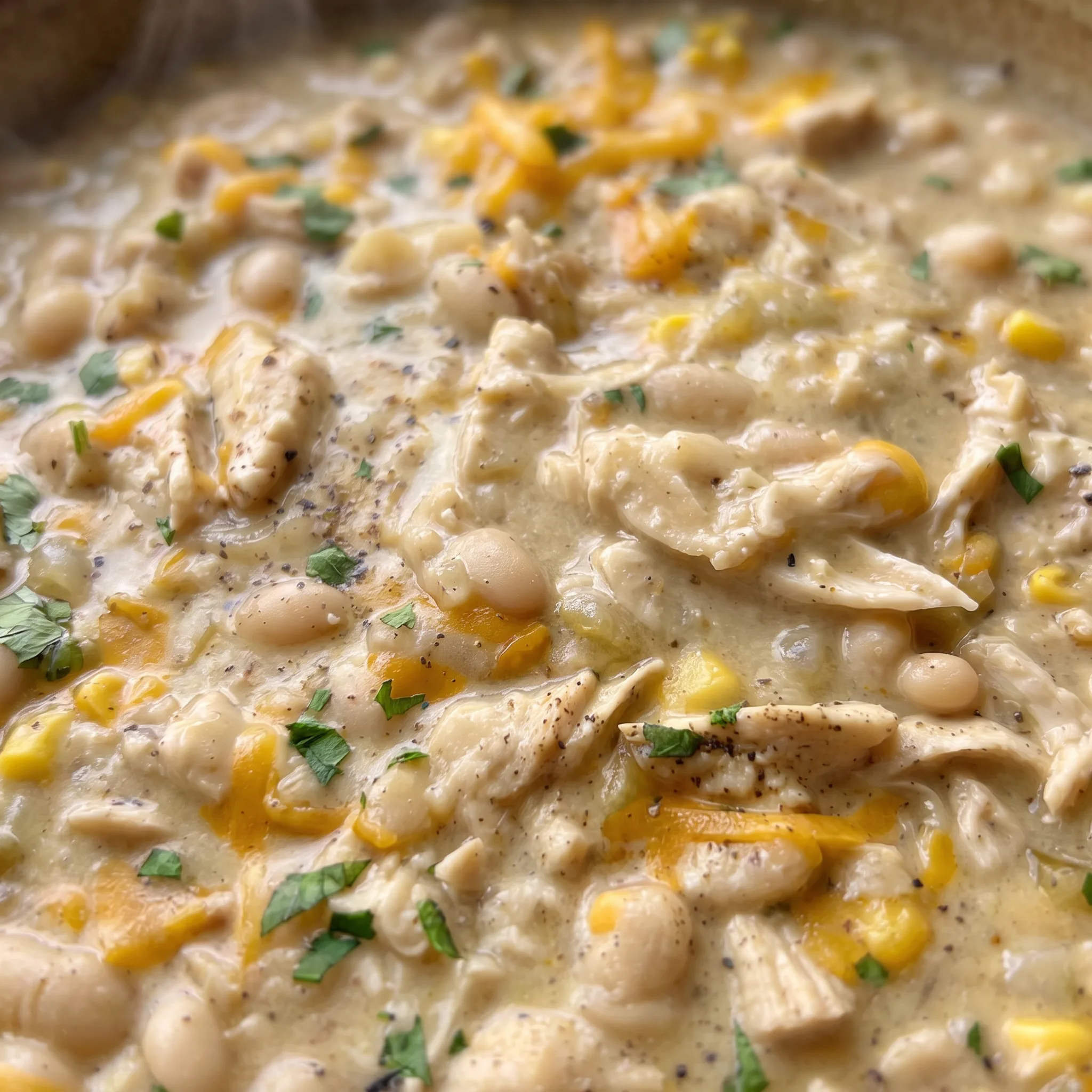
Pale, faintly green, and thin enough to move when you tilt the bowl, this pot gets its body from the beans themselves rather than a roux or a long reduction. That’s the thing about white chicken chili: it looks lighter than the red kind, and cooks expect it to taste that way. What catches people off guard is the sour cream going in near the end.
It hits a hot pot and tightens into flecks in seconds, and no amount of stirring fixes a seized pot. Tempering it with a ladle of the broth first is the difference between a smooth, unified broth and one dotted with white specks.
The other quiet risk is seasoning: the pot tastes right before the dairy goes in, then reads flat a minute later. Both problems live in the last five minutes, which is where a simple pot like this actually asks you to pay attention.
Keep the Sour Cream From Curdling
Sour cream hits a hot pot and tightens into tiny flecks that never smooth out. You can stir for minutes and still see them floating. That’s curdling, and it happens because the cream goes from cool to hot too fast.
You avoid it by giving the sour cream a head start. A ladle of the hot chili goes into the bowl first, and you stir.
The cream warms gradually, so when it goes back into the pot, it blends right in. I’ve skipped this step and ended up with a pot of chili dotted with white specks, which nobody wants. The result you’re after is a uniform, creamy broth, slightly thicker than before, with no visible bits of sour cream.
It should look like one smooth liquid, not two things refusing to mix. That’s the whole reason for the extra bowl and the extra minute.
Beans and Corn Thicken Without a Roux
Great Northern beans break down a little as they simmer. They shed starch into the broth, and that starch gives the chili body. Corn does a similar job, adding its own starch along with a faint sweetness that balances the green chiles.
You don’t need flour, cornstarch, or a long reduction. The beans and corn are already in the pot, doing the work while the chicken cooks. What you see after ten minutes is a broth that coats a spoon, thicker than when it started but not pasty.
The beans stay mostly whole, giving you something to chew, while the liquid around them has weight. If you’ve ever made a chili that tasted thin and watery, it’s usually because there wasn’t enough of this natural thickening. Here, it comes free with the ingredients.
Mild Chiles and Spices Build Gentle Heat
Green chiles bring a tangy, mild heat that wakes up the broth without burning. They go in with their liquid, which carries flavor you’d lose if you drained them.
Chili powder adds an earthy, mild spice that’s more about richness than fire. Cumin and oregano round it out, giving warmth and a savory depth that sits behind the chicken.
This isn’t a chili that makes you reach for water. It’s the kind you can serve to a table full of people with different tolerances, and everyone gets to eat without wincing. The heat should be a low hum in the background, noticeable but not the main event.
If you taste the broth and think it needs something, it’s usually salt, not more chili powder. The spices are there to support the chicken and beans, not to shout over them.
Cube the Chicken for Fast, Even Cooking
A whole chicken breast takes twenty minutes or more to cook through in simmering broth. Cut it into cubes, and that time drops to about ten.
The smaller pieces also cook more evenly, so you don’t get a dry, stringy end and a raw middle. The simmer is gentle, just enough to keep the liquid moving. A hard boil would toughen the meat, making it chewy instead of tender.
You’ll know it’s done when you cut into a cube and see no pink. The pieces should feel firm but give a little when pressed. They’ll stay juicy because they haven’t been overcooked.
That’s the trade-off you want: quick cooking without sacrificing texture. The chicken ends up in bite-sized pieces that fit on a spoon with some beans and corn.
What to Grab and What to Watch
Great Northern beans: Drained, they still carry enough starch to thicken the broth, so don’t rinse away that cloudy coating.
Mild green chiles: Their liquid is where the tangy heat lives, so dump both cans in whole rather than draining them.
Chicken breasts: Cube them yourself into even bite-sized pieces, since uneven chunks cook at different speeds in the simmer.
Sour cream: Full-fat holds up in hot broth, while the reduced-fat kind is more likely to break into flecks.
Chili powder: The grocery-store blend is mostly cumin and oregano already, so taste before adding more of either.
How to Read the Pot at Four Points Where It Can Go Wrong
When the onions are ready for the garlic
Onions go from tender to browned in under a minute at medium-high. Watch for them turning translucent and slack, with the sharp raw smell gone.
If they start browning at the edges, pull the pot off the heat for a moment before the garlic goes in. Garlic added to a hot dry pan burns in thirty seconds and turns the whole pot bitter. The card gives you four minutes for the onions and thirty seconds for the garlic.
Judge by smell and color, not the clock.
The ten-minute simmer and the chicken cube test
Ten minutes is enough only if the broth stays at a low simmer, not a hard boil. Bubbles should break the surface now and then, not roll.
Cut a thick cube open at ten minutes. Any pink in the middle means another two or three minutes. Boiling past that point tightens the chicken into dry, stringy strands.
If the liquid is reducing too fast, add a splash of broth or water to keep the cubes covered.
Tempering the sour cream without scrambling it
The chili must come off the boil before the sour cream goes in. A ladle of hot broth into the bowl, stirred smooth, warms the cream so it won’t seize.
If you see white flecks forming as you stir it back in, the pot was too hot. Pull it off the heat and whisk hard. The finished broth should look uniform, coating a spoon, not dotted with curds.
Two-thirds of a cup is the full amount; add it all once tempered.
Tasting for salt before the sour cream goes in
Salt perception changes once dairy hits the pot. Taste the broth after the simmer, while it’s still dairy-free.
It should taste seasoned, not flat. If it’s dull, add salt a quarter teaspoon at a time.
Once the sour cream is in, you can’t easily correct an oversalted pot. The half teaspoon on the card is a starting point, not a guarantee.
Your broth and canned chiles carry their own salt.

White Chicken Chili with Great Northern Beans
Ingredients
- 1 tablespoon olive oil
- 1 large onion chopped into small pieces
- 1 tablespoon minced garlic approximately 3 cloves
- 2 cups chicken broth
- 2 cans great Northern beans 14-ounce, drained
- 2 cans mild green chiles 4-ounce, including their liquids
- 1 pound boneless skinless chicken breasts cut into cubes
- 1 cup corn kernels
- 2 teaspoons chili powder
- 1 teaspoon ground cumin
- 1/2 teaspoon dried oregano
- 1/2 teaspoon salt
- 1/2 teaspoon black pepper
- 2/3 cup sour cream
Instructions
- In a large pot, warm the olive oil over medium-high heat. Put in the onions and sauté for about 4 minutes until they become tender. Stir in the garlic and continue cooking for another 30 seconds.
- Introduce the chicken broth, beans, green chiles, chicken, corn, chili powder, cumin, oregano, salt, and black pepper. Let it come to a boil, then lower the heat to low. Put on a lid and let it simmer for 10 minutes until the chicken is fully cooked.
- Place the sour cream in a small bowl. Ladle approximately 1/2 cup of the hot chili into the sour cream and stir until thoroughly blended. After that, transfer this mixture back into the chili and stir until all ingredients are incorporated. This technique helps keep the sour cream from separating. Serve and enjoy!
Swap White Beans Freely, But Leave the Mild Chiles and Full-Fat Sour Cream Alone
Great Northern beans: Cannellini or navy beans, drained, same 2 cans (14 ounces each). Cannellini are larger and hold their shape a bit more, so you’ll get bigger bites and slightly less thickening as they simmer. Navy beans are smaller and softer, breaking down faster, which gives you a thicker broth with less texture.
Neither changes the flavor much, but the body of the chili will shift.
Boneless skinless chicken breasts: About 3 cups of shredded rotisserie chicken, added at the end instead of raw. Skip the 10-minute simmer for the chicken. Stir the shredded meat in after the beans and corn have simmered, just long enough to heat through, about 2 minutes.
The chili won’t take on as much chicken flavor in the broth, but you save the cubing step and the meat stays tender. If you add it too early, it turns stringy.
Mild green chiles: None recommended. Stick with mild. Hotter chiles like jalapeños or serranos will overwhelm the gentle heat that lets the beans, corn, and chicken come through.
This pot is built for a table with mixed spice tolerance, and swapping in a hotter variety throws off that balance. The tangy, mild flavor of the canned green chiles is part of the broth’s character, not just heat.
Sour cream: Full-fat Greek yogurt, same 2/3 cup, tempered the same way. Greek yogurt brings a similar tang and creaminess, but it’s more prone to curdling if the pot is too hot. Temper it exactly as you would the sour cream: whisk a ladle of hot broth into the yogurt first, then stir it back in off the heat.
The finished chili will be slightly tangier and a touch thinner. Reduced-fat or fat-free versions of either will break into flecks no matter how carefully you temper.
Tips
- Salt the pot with the sour cream already in it, not before. The half teaspoon on the card tastes right in the dairy-free broth, but once the 2/3 cup of sour cream goes in, the fat coats your tongue and mutes the seasoning, so a pot that tasted fine a minute earlier reads flat. Taste after the sour cream is stirred through, then add salt a quarter teaspoon at a time. The beans and the two cans of green chiles, liquid included, already put sodium in the pot, so the correction is usually small.
- If the finished chili tastes flat after the sour cream is in, reach for acid before salt. The two 4-ounce cans of green chiles and the sour cream both carry tang, and that tang is what keeps the beans and corn from reading sweet and dull. A teaspoon of lime juice or a splash of the chile liquid stirred in at the end sharpens the broth without adding sodium, which matters here because the canned chiles and beans have already pushed the pot close to salty.
Storage and Serving: Loosen What the Beans Absorb
Eat this within an hour or two of the sour cream going in. That’s when the broth has body but still flows, the chicken is tender, and the beans haven’t pulled more liquid into themselves.
Leftovers keep three to four days in the fridge, and the chili thickens every day it sits, because the beans and corn keep drinking the broth. Cool it uncovered for about thirty minutes, then lid it and refrigerate.
Reheat a portion on the stove over low heat, adding a splash of chicken broth until it moves like chili again rather than paste. A microwave works, but stir every thirty seconds, since the edges heat faster than the middle.
Freeze the chili without the sour cream if you want a longer stretch; the dairy separates on thawing and turns grainy. Thaw overnight in the fridge, reheat gently, then stir in fresh sour cream off the heat. Serve in bowls with room for toppings.
Adding cold sour cream straight into simmering chili creates a sudden temperature shock: the dairy proteins tighten and squeeze out whey, leaving grainy flecks and a watery surface. The recipe’s alternative is to first blend the sour cream with a ladle of hot chili, which raises the cream’s temperature gradually so its proteins warm up slowly and stay suspended. This recipe uses that gradual route because it produces a smooth, stable cream base without any special equipment.

Frequently Asked Questions
Can I make white chicken chili ahead of time?
Yes, but leave the sour cream out until you reheat. Cook the chili through the simmer, cool it uncovered for about thirty minutes, then lid and refrigerate; it keeps three to four days. The beans and corn keep drinking broth as it sits, so by day two it’s closer to paste than chili.
Reheat over low heat with a splash of chicken broth until it moves like chili again, then stir in fresh sour cream off the heat. Freeze it without the dairy if you need a longer stretch, since sour cream turns grainy on thawing.
How do I keep sour cream from curdling in chili?
Temperature is the whole game, and the most common cause of flecks is a pot still at a boil when the cream goes in. Take the chili off the heat first, whisk a ladle of hot broth into the sour cream in a separate bowl until it’s smooth, then stir that back in. If you see white specks forming anyway, pull the pot off the heat and whisk hard; they’ll usually smooth out.
Full-fat sour cream holds up far better than reduced-fat, which breaks no matter how carefully you temper it. The finished broth should coat a spoon as one uniform liquid, not two things refusing to mix.
What’s the difference between white chicken chili and traditional chili?
No tomatoes, no red meat, and no long cook. Traditional chili builds on tomato and often beef, simmered for an hour or more until everything melds.
This pot gets its body from Great Northern beans and corn shedding starch into chicken broth, which is why it thickens in the ten-minute simmer rather than a long reduction. The color stays pale and the flavor leans tangy from mild green chiles instead of the deep, sweet-savory note tomatoes bring. Heat here is a low hum, built to serve a table with mixed spice tolerance.
Can I use rotisserie chicken instead of raw chicken breasts?
Yes, and it saves you the cubing step. Skip the ten-minute simmer for raw chicken and stir the shredded meat in after the beans and corn have simmered, just long enough to heat through. The trade-off is flavor: raw cubes give the broth chicken character as they cook, while rotisserie meat mostly just sits in it.
Add it too early and it turns stringy, so keep it to the last couple of minutes. If you’re using the raw breasts, cube them evenly so they cook at the same speed.