The mistake that flattens a creamed corn casserole into a soupy pan almost never happens at the oven. It happens at the colander, or rather the lack of one, because the whole kernels get tipped in straight from the can with their packing liquid still clinging.
Two cans of corn already carry plenty of moisture on their own, and the mix can only take up so much before the center quits setting. Drain the kernels until they look dry and you’ve solved the one variable that actually decides whether this slices or spoons. Everything else is forgiving.
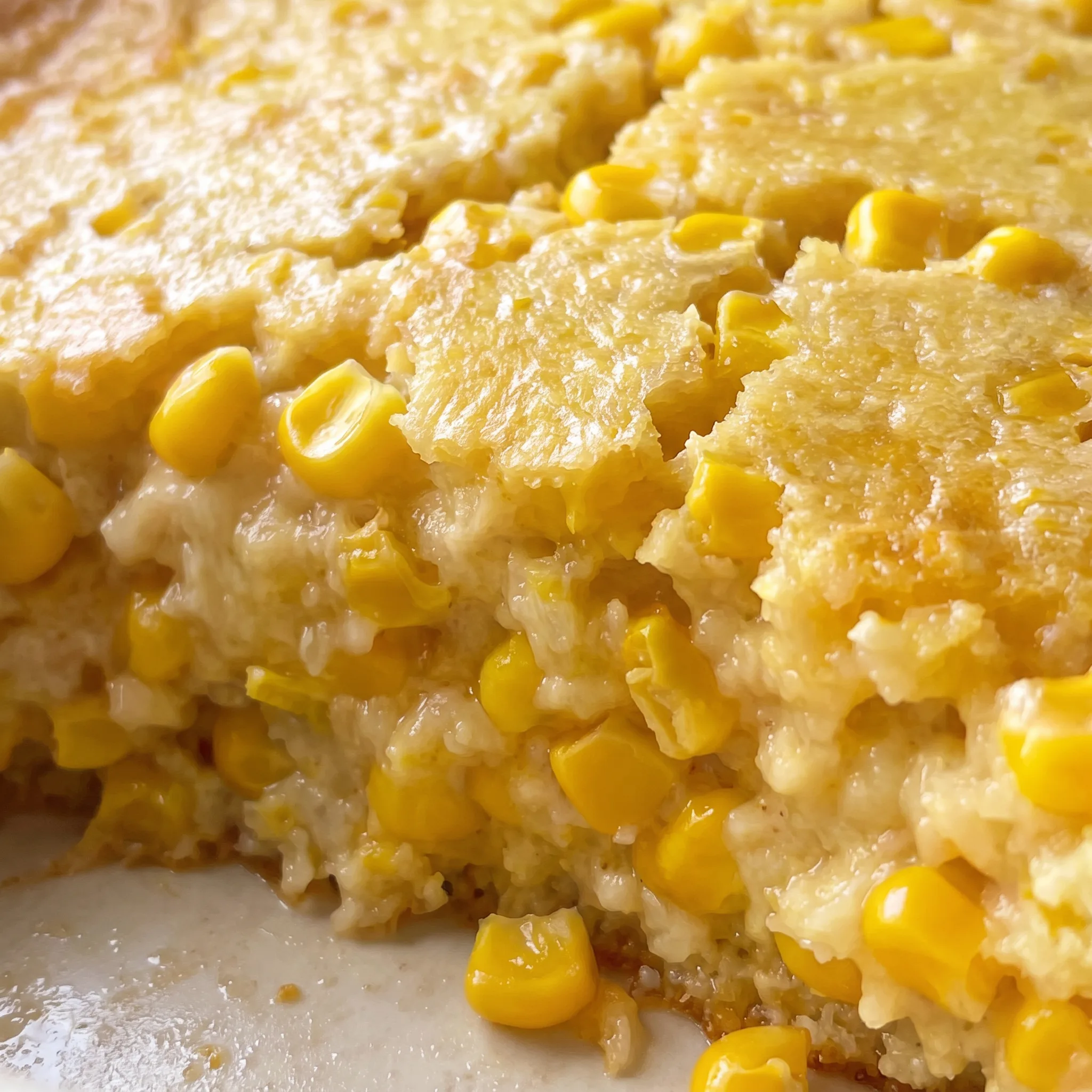
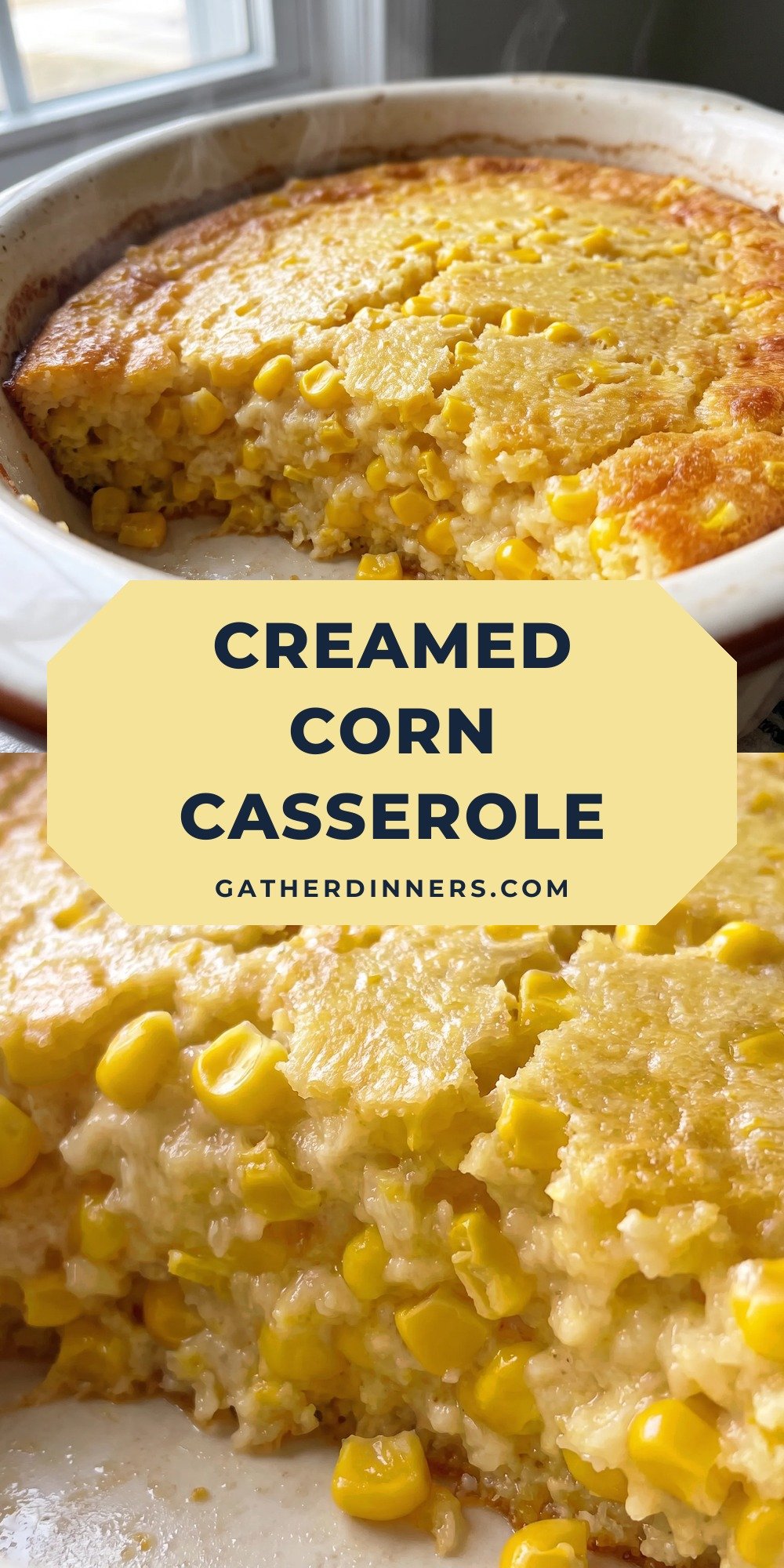
What lands on the table is soft and just set, closer to a savory custard than a cornbread, with a little sweetness that reads as corn rather than sugar.
The batter is ready when it is just uniform in color and no dry streaks of muffin mix remain; any further stirring continues to hydrate the flour and develop gluten. As you stir, the mixture will feel increasingly resistant and sticky rather than loose and lumpy. Once that resistance appears, the gluten network is already forming and the baked casserole will be tough rather than creamy.
One Wet Can Ruins the Balance
Drain the whole kernel corn and you get a casserole that sets into a soft, custardy slice. Skip that step, and you’re baking a puddle. The whole kernels arrive packed in liquid, and that liquid is not part of the recipe’s design.
Creamed corn brings its own moisture and body. Sour cream adds more. Together they hit a target the corn muffin mix can absorb.
A few extra tablespoons from the kernel can tip the whole pan from sliceable to spoonable. You’ll know it when the center never firms up, no matter how long it stays in the oven. The edges might brown and pull away, but the middle stays loose.
That’s not a baking problem. It’s a draining problem. Let the kernels sit in a colander while you gather everything else.
A quick shake, then a few minutes to drip. The corn should look dry, not glossy. That’s the cue to move on.
Get that right, and the texture lands where it should: tender, creamy, and just set enough to hold a scoop.
Butter Does Double Duty in the Pan
Melt the butter right in the baking pan and you grease the pan and start the batter in the same move. That’s the reason for the glass pan: you can microwave it safely, so the butter melts without a separate bowl.
A metal pan needs a bowl first, then a pour and a wipe. Either way, the goal is the same: a slick coating up the sides, not just a puddle on the bottom. Those buttered sides are what let the edges brown and pull away cleanly.
They also keep the first scoop from tearing. When you add the corn, sour cream, and dry mix straight into that pan, the melted butter becomes the fat base of the batter. No whisking, no extra dish.
The pan is the mixing bowl. That’s why the order matters less than the coating.
If the sides look dry, you’ll fight the casserole at serving time. If they’re glossy, it releases. The butter is already doing its job before the first ingredient goes in.
Texture Comes from the Mix and Cream
This casserole is not a cornbread. Without eggs, the corn muffin mix and sour cream set into something dense and creamy, closer to a savory pudding than a slice of cake. The mix gives structure and a little sweetness, but it doesn’t make the batter fluffy on its own.
Sour cream carries the fat and tang that turn the center into a soft, spoonable custard. That’s the texture people mean when they call it a corn casserole rather than a cornbread. Add eggs, as one variation does, and you get a different beast: lighter, taller, more cake-like.
Both are good. They’re just not the same dish.
The base recipe stays on the creamy side, and that’s the version worth making first. When you cut into it, the knife should meet little resistance. The interior looks moist but not wet.
It holds a scoop without running. If it’s fluffy and dry, eggs snuck in.
If it’s loose and weeping, something else went wrong. This one is soft, rich, and just set.
Three Tablespoons Is the Sweet Spot
Sugar in this recipe is a seasoning, not a dessert signal. Three tablespoons sounds like a lot until you taste it against two cans of corn and a box of muffin mix.
What you notice is a roundness, a little lift on the back end, not a sugary front. The corn’s own sweetness comes forward instead of getting buried.
Push the sugar to half a cup or three-quarters, as one variation suggests, and the casserole slides toward sweet pudding territory. Still good, but different.
It changes what you’d serve it with. The cheese variation goes the other way and drops the sugar entirely, letting cheddar and jalapeño carry the dish. That’s a savory casserole, not a sweet one.
The base recipe sits in between: sweet enough to feel like corn, savory enough to sit next to roast chicken or pulled pork. If you’re unsure which way to go, make it as written first. The three tablespoons are calibrated to the corn and the mix.
More than that and you’re making a different side dish.
Sour Cream Sets the Custard
One cup of sour cream for nine servings is not an arbitrary amount. It’s the main source of fat and moisture that turns the batter into a creamy, set interior. Too little and the casserole bakes up dry and crumbly, more like a cornbread than a spoonbread.
Too much and it never quite firms, leaving a greasy edge and a loose center. The corn muffin mix absorbs what the sour cream and creamed corn provide. That balance is what lets the casserole slice cleanly while staying soft.
The pan size matters here too. An 8×8 or 9×9 gives the batter enough depth to set without drying out.
A larger pan spreads it thin and the texture suffers. You’re looking for a center that barely jiggles when you shake the pan, edges that have pulled away and turned golden.
That’s the sign the sour cream has done its job. Serve it warm, scooped with a large spoon.
The interior should look creamy, not wet. If it’s dry, you’ll know next time to check the measure.
What Actually Changes the Bake
Whole kernel corn: Buy the 15-ounce can and drain it until the kernels look dry, not glossy.
Creamed corn: The 15-ounce can goes in whole, liquid and all, since that body is what the mix absorbs.
Sour cream: One cup, full fat, because the reduced-fat kind separates and leaves a watery edge.
Jiffy corn muffin mix: The 8-ounce box is the only leavening and structure here, so don’t grab a larger cornbread mix.
Butter: Half a cup, real butter, since the melted fat both coats the pan and becomes the batter base.
Reading the Pan Before You Pull It
When the center stops moving like the edges
At 35 minutes, shake the pan gently. The edges should be set and the center should jiggle only as much as they do.
If the middle still ripples while the edges stay still, give it 5 more minutes. The difference between a custardy slice and a loose scoop is often just that last 5 minutes.
Past 40, the custard can tighten and weep. Check every few minutes after 35.
The toothpick tells you about the custard, not the corn
A toothpick inserted in the center should come out clean, with no wet batter clinging. If it comes out coated, the sour cream and creamed corn haven’t set.
But if the toothpick meets resistance and pulls up crumbs, you’ve gone too far. The corn kernels will still be moist on their own, so a little moisture on the toothpick from a kernel is fine.
Look for batter, not corn.
Golden edges that pull away are your signal, not the timer
The edges will turn golden brown and start to pull away from the pan when the casserole is ready. If they’re deeply browned but the center still jiggles like liquid, the oven is too hot or the pan is too close to the element.
Lower the heat by 25°F and tent with foil. If the edges are pale and the center is set, it needed more time, not more heat.
The two-minute rest is for the set, not for flavor
After it comes out of the oven, the casserole needs 2 minutes on a wire rack. That short rest lets the custard finish setting so the first scoop holds together. Skip it and the center will run.
Wait much longer and it cools past warm, which changes the texture from creamy to stiff. Two minutes is the window: enough to firm, not enough to cool.

Creamed Corn Casserole with Sour Cream
Ingredients
Corn Casserole
- 1/2 cup butter 113 g
- 1 can whole kernel corn 15-oz, drained
- 1 can creamed corn 15-oz, not drained
- 1 cup sour cream
- 3 tbsp granulated sugar 38 g
- 1/2 tsp kosher salt
- 1 box Jiffy corn muffin mix 8-oz
Variations
Instructions
Corn Casserole
- Set oven to 350°F (175°C) to preheat.
- Place 1/2 cup butter in an 8×8 or 9×9 inch glass pan. Melt it in the microwave directly in the pan. (For a metal pan, melt butter in a bowl and then transfer it to the pan.) Using a spatula or pastry brush, coat the pan’s sides with butter to avoid sticking.
- Drain the can of whole kernel corn. Add the drained corn into the pan with the butter.
- Empty the can of creamed corn entirely into the pan.
- Stir in 1 cup sour cream.
- Mix in 3 tablespoons sugar and 1/2 teaspoon kosher salt (if using table salt, use 1/4 teaspoon).
- Add the 8-ounce box of Jiffy corn muffin mix.
- Stir all ingredients with a spatula until thoroughly combined. Scrape down the pan’s edges.
- Bake at 350°F (175°C) for about 35-40 minutes. The edges should turn golden brown and start to pull away from the pan. When the pan is shaken, the center should jiggle no more than the edges. Alternatively, check with a toothpick: if it comes out clean with no wet batter, it’s ready.
- Allow to cool on a wire rack for a couple minutes, then serve warm.
Variations
Storage and Serving: Warm Is the Only Way It Shines
Eat this casserole within 20 minutes of the 2-minute rest. That’s when the custard is loose enough to scoop and set enough to hold. Leftovers keep in the fridge for 3 days in a sealed container, but the texture shifts: the custard firms and the edges weep water.
That water is normal, not spoilage. Reheat single portions in the microwave for 45 to 60 seconds, covered, until the center loosens again. A whole pan goes back into a 325°F oven for 10 minutes, tented with foil to stop the top from drying.
The casserole doesn’t freeze well. Sour cream and creamed corn separate on thaw, leaving a grainy, watery base, so don’t bother. If you’re making it ahead, assemble the batter, cover, and refrigerate up to 24 hours.
Add 5 minutes to the bake time straight from cold. Whatever finishing touch you use, a sour cream swirl or a final sprinkle of cheese, goes on before baking, never after. Once it’s out of the oven, the surface sets fast and nothing will swirl into it.
Swaps That Keep the Custard Intact
Jiffy corn muffin mix (1 8-ounce box): A from-scratch cornbread mix: 3/4 cup cornmeal, 3/4 cup all-purpose flour, 1/4 cup sugar, 1 tablespoon baking powder, and 1/2 teaspoon salt. The casserole will still set, but the crumb is coarser and less sweet. The leavening is stronger, so the bake may puff more in the center; check at 35 minutes.
Without the mix’s fine texture, the custard can seem slightly grainy. Also, if you use a gluten-free cornbread mix, choose one with added binder like xanthan gum, or the center may not hold together.
Sour cream (1 cup): Full-fat Greek yogurt, same 1 cup. The tang is sharper and the texture a touch denser.
It sets a bit firmer, so the casserole may slice more cleanly but taste less rich. Avoid fat-free yogurt; it separates and leaves a watery ring. If you only have low-fat sour cream, expect a looser center.
Whole kernel corn (1 15-ounce can, drained): Frozen corn, about 1 1/2 cups, thawed and patted dry. Or a second can of creamed corn, but then reduce the sour cream to 3/4 cup. Frozen corn is sweeter and firmer, giving more pop but less integrated texture.
Pat it dry or the extra water makes the center soggy. If you swap in creamed corn for the whole kernels, the casserole becomes softer and less chunky; reducing the sour cream keeps it from turning too wet.
Butter (1/2 cup): Neutral oil like canola or vegetable, same 1/2 cup, but melt it in a bowl first if your pan isn’t glass. Oil won’t brown the edges the same way; they’ll stay paler and may not pull away as cleanly. The flavor is neutral, so the corn and sour cream come forward more.
The texture stays tender, but the casserole can taste slightly less rich. Use oil only if you need dairy-free; otherwise butter is better here.
Granulated sugar (3 tablespoons): Honey or maple syrup, same 3 tablespoons, but reduce the sour cream by 1 tablespoon. Liquid sweeteners add moisture, so the center may take 5 extra minutes to set. Honey brings a floral note that can overpower the corn; maple is milder.
The crust browns faster, so tent with foil if the edges darken too soon.
Tips
- If you want a single check that covers both cues, tilt the pan slightly toward you at the 35-minute mark. A set custard stays put against the glass with only the surface quivering, while a loose one slides as a mass and ripples back. The tilt shows you the center and the edge in one look, which a toothpick can’t do because it only samples the spot you pierce.
Frequently Asked Questions
Can I make creamed corn casserole ahead of time and bake it later?
Assemble the batter, cover the pan, and refrigerate up to 24 hours. The batter will thicken as the muffin mix drinks up moisture, but that’s fine; stir it once before it goes in the oven. Add 5 minutes to the bake time straight from cold, since the center takes longer to set when the batter starts chilled.
Hold off on any sour cream swirl or cheese topping until just before baking, because once the surface sets, nothing swirls into it.
Why is my corn casserole still liquid in the middle after baking?
Check the drained corn first, because a few extra tablespoons of packing liquid is the most common culprit. If the kernels went in glossy rather than dry, that water never gets absorbed by the muffin mix and the center stays loose no matter how long it bakes.
A second check is the sour cream measure: more than a cup adds fat and moisture the mix can’t take up. If both look right, the oven may be running cool, so verify with a thermometer rather than tacking on more time.
How do I know when corn casserole is done without a toothpick?
Shake the pan gently. The edges should be set and golden, and the center should jiggle no more than they do; if the middle ripples while the edges stay still, it needs more time. Another cue is the pull-away: when the sides have shrunk back from the pan and turned golden brown, the custard is set.
The surface should look matte, not wet or shiny. If you’d rather not rely on the shake, a toothpick is still the backup, but look for batter on it, not moisture from a corn kernel.
What’s the difference between this corn casserole and corn pudding?
Corn pudding is usually an egg-thickened custard, so it bakes up softer and more delicate, often with a looser scoop. This casserole leans on corn muffin mix and sour cream for structure, which gives it a denser, more spoonable set and a slightly sweet cornbread edge. The base recipe has no eggs, so it stays creamy rather than fluffy.
Add the 2 eggs from the variation and you’re closer to a pudding texture, taller and lighter, but that’s a different dish.
Can I double this recipe for a crowd?
Yes, and a 9×13 pan works for the doubled batch, though the center will take longer to set, so start checking a few minutes past the usual time. If you’d rather use a slow cooker, the recipe doubles into a 6-quart cooker on high for 2 hours or low for 3 to 4.
Keep the ratios exact: two cans of drained whole kernel corn, two cans of creamed corn, two cups sour cream, and two boxes of muffin mix. The texture stays the same as long as you don’t crowd the pan or short the draining.