Anyone can dump cans into a dish and call it green bean casserole. Making one that tastes like something takes a skillet and a little patience with mushrooms. This bacon mushroom green bean casserole is the scratch-built version of the holiday standard, and the work is mostly in one pan: bacon renders, onions and mushrooms go in after it, and what’s left on the bottom of the skillet ends up in the sauce.
The real difficulty is moisture. Canned beans carry enough water to keep the filling loose, which sounds like a flaw until you taste a version made with beans that gave off nothing and baked up tight. Brown the mushrooms properly and the casserole tastes savory rather than flat.
Rush them and you’ll know. The topping stays crisp only because it never touches the wet filling, and that’s a small thing that decides whether the dish works.
Why Canned Beans Keep It Moist
Canned green beans arrive packed in liquid, and even after a good drain they hold enough water to matter. That moisture keeps the casserole from tightening into something dry after its time in the oven. Fresh or frozen beans behave differently.
They give off less water as they bake, so the filling can end up dense instead of creamy. The sauce here needs that extra liquid to stay fluid enough to coat every bean without turning gluey.
Four cans supply both the volume for a 9×13-inch dish and the moisture the sauce relies on. When you fold them into the creamy base, they should look glossy and well coated, not swimming. That slight looseness before baking is exactly what you want.
Monterey Jack’s Role in the Sauce
Monterey Jack does more than taste mild and tangy. As it melts into the cream of mushroom soup and milk, it helps pull everything together into a sauce that clings to the beans instead of sliding off. The fat in the cheese works with the soup to create a cohesive texture, one that won’t break apart or turn greasy in the oven.
Skip a melting cheese and you risk a filling that separates into watery pockets. A little tang from the Jack also cuts through the smoky bacon and earthy mushrooms, so each bite stays balanced. When you stir it in, watch for a smooth, even sauce, with no streaks of cheese left.
That’s the sign the base is ready for the beans.
Balancing Creamy Base and Beans
Two cans of soup and a quarter cup of milk might look scant next to four cans of beans, but that ratio is deliberate. It’s enough sauce to coat every bean generously without leaving a pool of liquid in the dish. Too much and you’d end up with a runny casserole; too little and it would bake up dry and clumpy.
The sauce thickens a bit in the oven as some moisture evaporates, so before baking it should look a little loose, almost like it needs a few more minutes. That’s normal.
After 30 minutes, it should bubble around the edges and hold together when served. This amount yields 10 solid servings, each with a balanced bite of beans and creamy base.
Crispy Onions Stay on Top
Those French fried onions go on last, after the mixture is in the baking dish, and they stay put. If you stirred them into the wet filling, they’d soak up moisture and lose their crunch before the casserole even hits the oven.
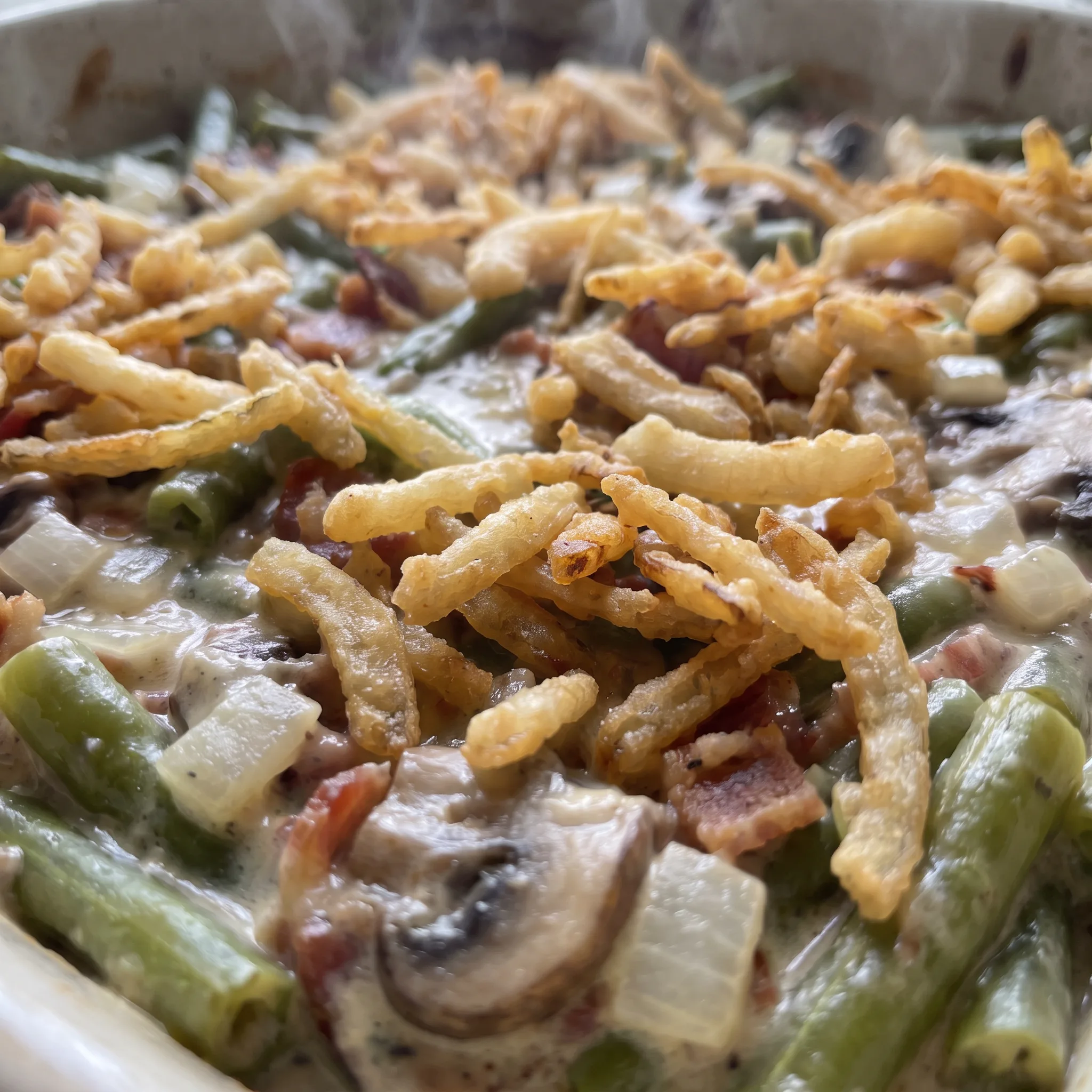
Sprinkled over the top, they toast and stay crisp, offering a textural contrast to the soft beans and creamy sauce. The full cup and a half covers the surface in an even layer, so every serving gets a few. After baking, they should be golden and shatter lightly when you press them.
That crisp top is the finish line. Once you see it, the casserole is ready to come out.
One Skillet Builds the Flavor
Cooking bacon, onions, and mushrooms in the same pan builds a depth you can’t get from mixing cold ingredients. The bacon fat becomes the cooking medium, so the onions and mushrooms soak up that smoky richness as they soften and brown. Those browned bits stuck to the skillet dissolve into the soup mixture, adding a savory backbone.
Mushrooms cooked until golden develop a deeper, meatier taste that enhances the whole dish. And because everything happens in one pan, you don’t need extra oil and cleanup is simpler. When you stir in the soup and bacon, the mixture should look thick and smell deeply savory.
That’s the base ready for the beans.
What to Buy and Prep Before This Casserole Goes Together
Bacon: Regular-cut strips crisp better than thick-cut here, and you need the rendered fat left in the pan for the onions and mushrooms.
Button mushrooms: Buy whole and chop them yourself, since pre-sliced ones are often wet and steam instead of browning.
Monterey Jack: Shred it off the block, because bagged shreds are dusted with starch that keeps them from melting smooth.
Cream of mushroom soup: Use the condensed cans straight from the tin, undiluted, since the milk added later is the only thinning this base gets.
French fried onions: The 1 1/2 cups need to be crisp and dry out of the can, so check for soft clumps before you scatter them.
How to Read the Pan, the Sauce, and the Top as You Build the Casserole
When the bacon fat is ready for the onions
After the bacon crisps, you pour off all but about 2 tablespoons of the fat. Too much left and the onions and mushrooms will fry instead of soften, turning greasy and splotchy.
Too little and they’ll stick and scorch before they give up their water. The pan should look glossy, not wet, with a thin film that just covers the bottom. If you’re unsure, tilt the pan; the fat should slide as a shallow pool, not a deep one.
The point when the mushrooms stop steaming and start browning
Mushrooms go in and immediately release water. For the first few minutes they’ll steam and look pale.
That’s fine. The moment to watch is when the steam thins and the edges begin to color.
That’s when the heat is high enough to brown them without burning. If they’re still gray and wet after 5 minutes, your pan is too crowded or too cool.
Raise the heat slightly and keep them moving. Golden brown means deeper flavor; pale means the casserole will taste flat.
Judging the sauce before the beans go in
Once the soup, milk, and cheese go in, you’re looking for a smooth, even sauce with no streaks of unmelted cheese. It should coat the back of a spoon but still drip off. If it’s thick and pasty, the cheese seized or the heat was too high; lower the heat and stir in a splash more milk.
If it’s watery, keep stirring over low heat until it tightens slightly. This is the base that will hold the beans, so it needs to be fluid but not loose.
How the filling should look when it goes into the dish
After folding in the green beans, the mixture should look glossy and well coated, with no pool of liquid at the bottom of the skillet. It will seem a little loose, and that’s correct.
If it’s tight and clumpy, the sauce is too thick and the casserole will bake up dry. If it’s soupy, you’ll get a runny dish. Spread it level in the 9×13 so it bakes evenly.
The onions go on top in an even layer; any gaps will leave bare spots that won’t crisp.
Reading the bake: bubbles and the color of the top
At 350°F, the casserole needs about 30 minutes to heat through and bubble. The sign it’s done is bubbling around the edges and a golden, crisp top.
If the onions are browning too fast, tent with foil. If the center isn’t bubbling after 30 minutes, give it a few more. Underbaked, the sauce stays thin; overbaked, the beans soften too much and the top burns.
The bubble is your cue, not the clock alone.
Bacon Mushroom Green Bean Casserole
Ingredients
- 6 strips bacon
- 1/2 yellow onion finely diced
- 1 1/2 cups button mushrooms chopped
- 3 cloves garlic minced
- 2 cans cream of mushroom soup 10.5-ounce
- 1/4 cup milk
- 1 cup Monterey Jack cheese shredded
- salt and pepper to taste
- 4 cans cut green beans 14.5-ounce, drained
- 1 1/2 cups French fried onions
Instructions
- Set oven temperature to 350°F (175°C) and apply a light coating of nonstick cooking spray to a 9×13-inch baking dish.
- Place bacon in a large skillet set over medium-low heat and cook until it becomes crisp. Move the bacon to paper towels to drain, then crumble it. Pour off all but about 2 tablespoons of the bacon grease and put the pan back on medium heat. Add the onions and cook, stirring from time to time, for about 5 minutes, until they turn translucent.
- Add the mushrooms and cook, stirring from time to time, for 5 minutes, until they become golden brown. Add the garlic and cook for 1 minute, until its aroma is released. Stir in the undiluted mushroom soup and the crumbled bacon. Stir in the milk and cheese until the cheese is melted. Season with salt and pepper to taste. Fold in the green beans until evenly incorporated.
- Transfer the mixture into the prepared dish and scatter the fried onions over the top. Bake, uncovered, for 30 minutes, until heated through and bubbling.
Storage and Serving: What Happens After the Bake
Eat this casserole within 30 minutes of pulling it from the oven. That’s when the fried onion topping is at its crispest and the sauce holds together without turning watery. Leftovers keep in the fridge for up to 3 days in an airtight container.
The filling actually deepens overnight as the bacon and mushroom flavors spread through the sauce. The topping does not. Those fried onions soften in the cold and lose their snap, so don’t expect the same contrast on day two.
Reheat covered at 350°F for 15 to 20 minutes, then uncover for the last 5 if you want to dry the top out. A microwave will leave the onions limp and the beans unevenly hot. If you’re serving a stored portion, add a fresh handful of fried onions after reheating.
Skip freezing the assembled dish; the dairy-based sauce separates and the beans go slack. Freeze only the filling without the topping if you must, up to 2 months, and add fresh onions after it thaws and bakes.
Swaps That Hold the Casserole Together, and One You Shouldn’t Make
Bacon: Turkey bacon or a plant-based bacon substitute. Regular pork bacon renders enough fat to cook the onions and mushrooms and leaves the drippings that carry the smoky backbone of the dish.
Turkey bacon gives up far less fat, so you’ll need to add a tablespoon of oil to the skillet before the onions go in, and the finished casserole will taste leaner and less savory. Plant-based bacon often contains added sugar and won’t crisp the same way; it can also leave a sticky film in the pan. If you go that route, cook it separately and add a little smoked paprika to the vegetables to bring back some depth.
Cream of mushroom soup: Cream of celery, cream of chicken, or a homemade béchamel with sautéed mushrooms. The condensed soup is the base that thickens in the oven and holds the beans.
Cream of celery works as a straight one-to-one swap, though it tastes lighter and less earthy; you may want to add an extra half cup of chopped mushrooms to compensate. Cream of chicken brings a poultry note that fights the bacon a bit. A homemade béchamel (butter, flour, milk) will be thinner than the canned product, so reduce the milk in the recipe to two tablespoons and simmer the sauce until it coats a spoon before folding in the cheese.
Expect a fresher, less processed flavor but a slightly looser set.
Monterey Jack cheese: Cheddar, Gruyère, or a dairy-free melting cheese. Monterey Jack melts smoothly and has a mild tang that balances the smoky, earthy notes. Sharp cheddar will overpower the casserole, so use a mild or medium cheddar and shred it yourself; bagged shreds are coated with starch and can turn grainy.
Gruyère adds a nutty depth that’s pleasant but richer, so cut back to three-quarters of a cup. For dairy-free, choose a block-style vegan cheese that melts, not a crumbly one, and shred it fine.
Stir it in over low heat and don’t let the sauce boil, or it can separate. The sauce may look slightly less glossy but will still coat the beans.
Milk: Unsweetened oat milk or chicken broth. The quarter cup of milk thins the condensed soup just enough to make a sauce that clings without being pasty.
Oat milk behaves almost identically, with a neutral taste that won’t distract. Chicken broth adds a savory note but also salt, so taste before seasoning with salt.
Either way, add it a little at a time and stop when the sauce drips off a spoon in a slow stream; you might not need the full amount if your cheese is especially moist.
Tips
- Pat the drained canned green beans dry with paper towels before folding them into the sauce. Four cans hold a surprising amount of surface water even after a good drain, and that extra liquid thins the condensed soup and cheese base. Blotting them in a single layer on a towel takes a couple of minutes and keeps the filling thick enough to coat each bean instead of pooling in the dish.
- Add the shredded Monterey Jack off the heat. The skillet is still hot from browning the mushrooms and garlic, and cheese dropped into a simmering pan can break into greasy streaks. Pull the pan off the burner, stir the cheese in a handful at a time, and put it back on low only if it needs help melting. The sauce stays smooth and clings to the beans rather than separating in the oven.
The sauce is a temporary emulsion of milk, cream of mushroom soup, and melted Monterey Jack. Once the cheese is fully incorporated, the sauce is stable only as long as it stays below a simmer; if it is heated too aggressively, the milk proteins coagulate and the fat globules coalesce, leaving a greasy film and a broken, watery texture. The visual signal is a glossy sheen of fat separating at the edges of the pan or a sudden thinning of the sauce, at that point the emulsion cannot be fully restored.

Frequently Asked Questions
Can I make this green bean casserole ahead of time?
Assemble it up to the point of the topping, cover, and refrigerate. Hold the fried onions back until just before baking, since they soften in the cold and lose their snap.
The bacon and mushroom flavors settle into the sauce overnight, so a day-ahead version often tastes deeper than one baked straight through. Add the onion layer right before the dish goes in, then bake it as written. If you’re working more than a day out, don’t freeze the assembled dish; the dairy sauce separates and the beans go slack.
Why is my green bean casserole watery?
The beans weren’t drained hard enough. Four cans hold a surprising amount of packing liquid, and whatever stays in the can ends up in the dish.
Tip them into a colander, let them sit, then press gently with a paper towel or the back of a spoon before folding them into the sauce. A second cause is underbaking: the sauce thickens as it bakes, so if the center never bubbles, the filling stays loose.
Look for bubbling at the edges before you pull it.
How is this different from the classic green bean casserole?
Bacon and Monterey Jack. The classic is canned soup, milk, beans, and fried onions, and that’s it.
Here the bacon renders in the skillet and the onions and mushrooms cook in that fat, so the base picks up smoke and depth before the soup ever goes in. The Jack melts into the sauce and gives it body and a mild tang that cuts the bacon.
Mushrooms get browned rather than dumped in cold, which is where the earthier flavor comes from.
Do I need to thaw frozen green beans if I use them instead of canned?
Thaw and drain them first. Frozen beans carry a lot of surface ice, and if they go into the skillet still frozen they’ll drop water into the sauce and thin it out.
Spread them on a sheet pan or in a colander to thaw, then pat them dry. Expect a firmer bite and a less creamy filling than the canned version, since frozen beans release less liquid as they bake. Four cans is the volume the dish is built around, so match that roughly by weight.