What makes a sweet potato casserole worth the oven space is the gap between the custard and the crust, and most versions collapse it into one soft texture. The base has to set firm enough to slice while staying loose enough to spoon, and the pecan streusel needs to stay in distinct crumbs rather than melt into a sheet. Get the raw mixture too wet and the whole thing bakes into a slump; overwork the topping and you lose the crackle entirely.
That tension is the dish. This sweet potato casserole holds both, and the contrast is why it earns a spot next to the turkey instead of getting pushed to the dessert end of the table.
Why Prebaked Sweet Potatoes
The flesh from sweet potatoes you’ve already baked comes out dense and dry, almost like a paste. Raw grated or boiled sweet potatoes carry a lot of water, and when you mix them with eggs and milk, that water has nowhere to go. The casserole bakes into a soupy, loose mess that never sets.
With prebaked flesh, the natural moisture has cooked off, so the mash is concentrated. You get about 3 cups from 5 medium sweet potatoes, and that amount fits the eggs, butter, and milk.
The ratio is what keeps the texture firm but creamy, not runny. Mashing prebaked flesh also gives you a smooth base without any extra liquid from boiling.
No need to drain or squeeze. The result is a casserole that slices cleanly and holds its shape on the plate.
The Pecan Topping That Caramelizes
A streusel topping is a balancing act. Too much flour and it turns pasty; too much butter and it spreads into a greasy sheet.
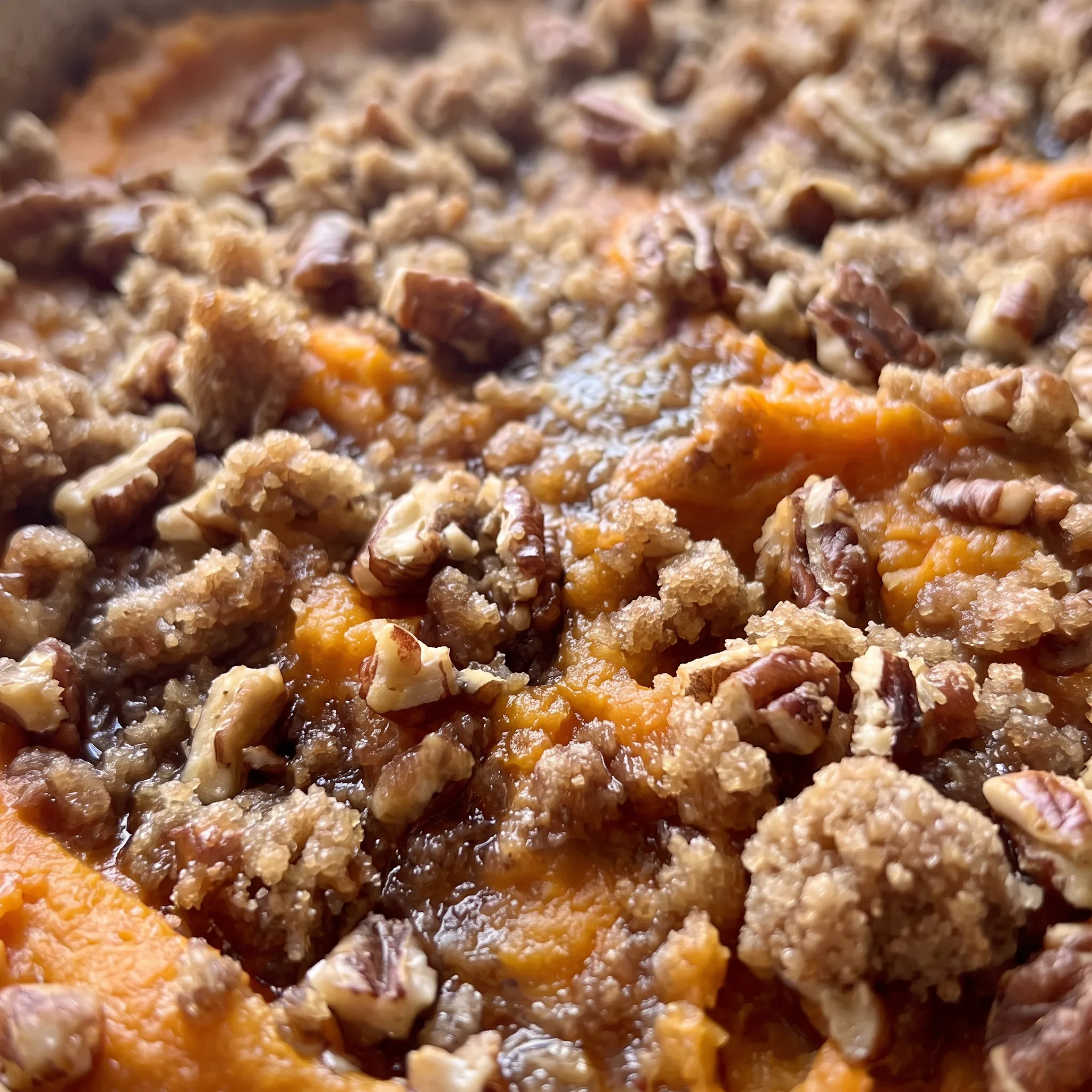
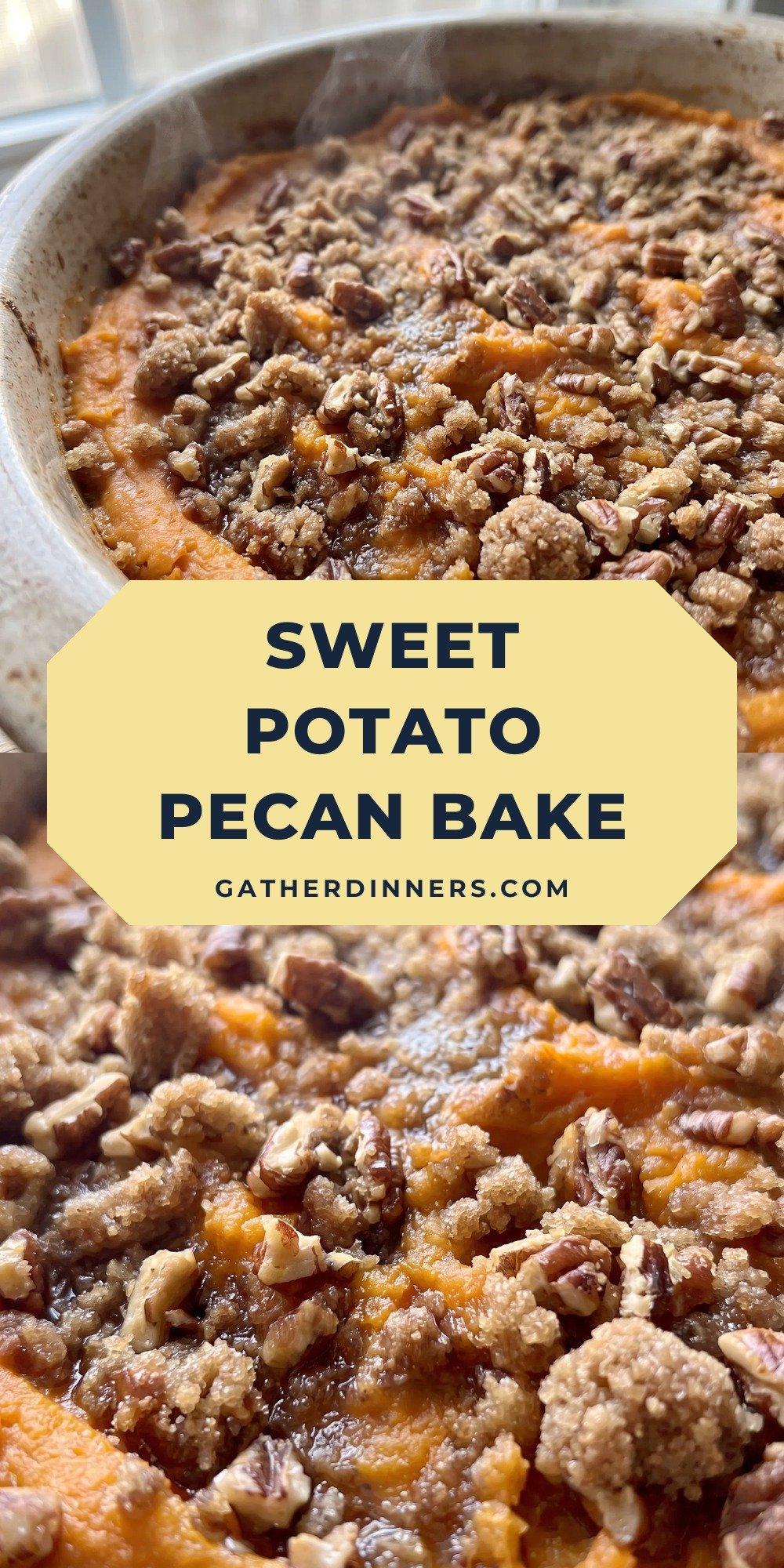
This one uses a half cup of brown sugar, a third cup of flour, and a quarter cup of softened salted butter. That ratio creates coarse crumbs with little pockets of sugar and butter that melt and caramelize in the oven.
The salt in the butter keeps the sweetness from becoming one-note. Chopped pecans add crunch and a nutty flavor that cuts through the soft casserole. When you mix it, stop when it looks like clumpy sand.
Overworking will make it smooth and less crisp. Baked, the topping turns a deep golden brown and crackles when you cut into it.
Each bite gives you a shatter of caramelized sugar and nuts against the creamy sweet potato.
The Custard Base and Its Balance
Eggs are the structural backbone here. They coagulate as the casserole bakes, turning the sweet potato puree into a sliceable custard.
Without them, you’d have a loose mash. Evaporated milk adds richness and a subtle cooked note without introducing too much water, which would make the custard weep. The granulated sugar is modest, just half a cup, because prebaked sweet potatoes are already sweet.
More sugar would push the dish into candy territory and mask the natural flavor. A teaspoon of vanilla and half a teaspoon of kosher salt round out the sweetness and make the sweet potato taste more like itself. The mixture should look glossy and thick before it goes into the dish.
After baking, it sets into a tender, spoonable custard that contrasts with the crunchy topping.
Pick Your Dish for Thickness
The size of your baking dish changes the character of the casserole. A 9×13-inch pan gives you a thinner layer, maybe an inch deep, so there’s more surface area for the pecan topping.
Every serving gets a generous amount of crunch. An 11×8-inch dish makes a thicker casserole, closer to two inches, with a higher ratio of custard to topping.
The filling stays softer and more prominent. Neither is wrong, but they eat differently.
In the larger dish, the topping caramelizes quickly and the custard sets firm. In the smaller one, the center stays a bit more moist and the topping covers less of each bite. Choose based on whether you want a crunchier or creamier experience.
The recipe works either way, but the texture shifts with the pan.
Marshmallows on Top
Marshmallows turn this side dish into something closer to dessert. They go on after the casserole has baked and the pecan topping is already browned. A quick pass under the broiler puffs them up and toasts the edges to a deep gold.
The result is a gooey, sticky layer that pulls into strings when you serve it. That softness contrasts with the crunchy pecans underneath, so you get both textures in one bite. But marshmallows add a lot of sugar.
If you prefer a more savory casserole, skip them. The pecan topping alone is sweet enough. For those who grew up with marshmallow-topped sweet potato casserole, this is the version that feels like a holiday.
Just watch them closely under the broiler; they go from golden to burnt in seconds. The finished dish is rich and sticky, best served warm.
The Ingredients That Decide How This Bakes
Prebaked sweet potatoes: Buy firm, deep-orange ones without soft spots, since you need about 3 cups of dry, concentrated flesh from 5.
Salted butter for the topping: Let it sit out until it gives under a finger, because cold butter stays in hard lumps and never blends into the crumbs.
Light brown sugar: A fresh, soft bag smells like molasses; if yours is rock-hard, the topping bakes dry instead of caramelizing.
Chopped pecans: Taste one before you commit, since stale or bitter nuts will flavor the whole topping and there’s no fixing that.
Evaporated milk: Shake the can well, because the fat and solids settle and pour out thin at the start and thick at the end.
Kosher salt: Use a coarse brand like Diamond Crystal, since fine table salt measures much denser and will over-salt the custard.
How to Read the Casserole at Every Stage
When the topping is coarse enough
Stop mixing when the butter, sugar, flour, and cinnamon look like clumpy sand with visible pebbles of butter. If you keep going, the butter melts into the flour and the topping turns into a paste.
That paste bakes into a hard, dull crust instead of crisp, caramelized crumbs. You want texture you can see and feel, not a uniform dough.
Judging the raw sweet potato base
Before it goes in the dish, the mixture should look glossy and thick, like a loose pudding that holds a soft mound on a spoon. If it’s watery or slides off easily, the eggs and milk aren’t evenly worked in, or your sweet potatoes were too wet.
A quick extra mash or a few more strokes will bring it together. This is your last chance to catch a loose base before baking.
Knowing when the custard is set
At 25 minutes, check the center. It should look puffed at the edges and barely jiggle when you nudge the pan. If the middle still ripples like liquid, give it 3 to 5 more minutes.
Pull it too early and the slices slump; leave it too long and the custard weeps and separates. The topping should be deep golden and smell like caramel, not flour.
The broiler window for marshmallows
Once marshmallows go on, they go from white to burnt in less than a minute. Stay at the oven with the door cracked. You’re looking for an even, deep gold across the top and a gooey, puffed surface.
The moment you see dark spots forming, pull the dish. Burnt marshmallows turn bitter and ruin the topping underneath.

Sweet Potato Casserole with Pecan Topping
Ingredients
Brown Sugar Pecan Topping
- 1/2 cup light brown sugar 100 g
- 1/3 cup all-purpose flour 40 g
- 1 teaspoon ground cinnamon
- 1/4 cup salted butter 57 g, softened
- 1/2 cup chopped pecans 57 g
Casserole
- 5 prebaked sweet potatoes about 3 cups flesh
- 1/2 cup granulated sugar 100 g
- 2 large eggs
- 1/4 cup unsalted butter 57 g, slightly melted
- 1/3 cup evaporated milk 80 mL, can use milk or cream
- 1 teaspoon vanilla extract
- 1/2 teaspoon Kosher salt
Instructions
Brown Sugar Pecan Topping
- Set oven temperature to 325°F (165°C).
Casserole
- In a medium bowl, mix 1/2 cup (100 g) brown sugar, 1/3 cup (40 g) flour, 1 teaspoon cinnamon, and 1/4 cup (57 g) softened salted butter with a fork or pastry cutter, using your hands if necessary, until the mixture resembles coarse crumbs. Fold in 1/2 cup (57 g) chopped pecans.
- Remove the flesh from 5 prebaked sweet potatoes into a large bowl and mash with a potato masher until you have about 3 cups.
- Add 1/2 cup (100 g) granulated sugar, 2 large eggs, 1/4 cup (57 g) melted unsalted butter, 1/3 cup (80 mL) evaporated milk, 1 teaspoon vanilla extract, and 1/2 teaspoon Kosher salt, stirring until smooth. Distribute the mixture evenly in a 9×13-inch baking dish (or an 11×8-inch dish for a thicker casserole). Scatter the pecan topping uniformly over the sweet potato mixture.
- Bake for 25 to 30 minutes, until the topping is lightly browned and caramelized.
- If adding marshmallows, sprinkle them over the top and broil for 2 minutes, until golden brown and gooey.
Swaps That Keep the Custard and Crunch Intact
Evaporated milk: Whole milk or heavy cream, starting with the same 1/3 cup the recipe uses. Evaporated milk brings a cooked, concentrated richness and very little water. Whole milk adds more liquid, so the custard may bake up looser; give it the full 30 minutes and check the center.
Heavy cream adds fat but also water, so expect a richer, softer set. If you use cream, you might not need the full amount; start with 1/4 cup and add more only if the mixture looks stiff.
Salted butter in the topping: Unsalted butter plus a pinch of kosher salt. The salt in the butter balances the brown sugar and keeps the topping from tasting flat. If you only have unsalted, add a small pinch of kosher salt to the dry ingredients before cutting in the butter.
Go easy: you can always sprinkle more on the finished topping, but you can’t take it out. The texture stays the same.
Pecans: Walnuts, almonds, or more of the same. Pecans give a buttery crunch that softens slightly in the oven. Walnuts are softer and can turn a bit bitter when toasted, so taste them first.
Almonds are harder and stay crunchy, but their flavor is more neutral. If you omit nuts entirely for an allergy, the topping becomes a plain streusel: still crisp, but you lose the nutty contrast. Use the same 1/2 cup amount.
All-purpose flour in the topping: A gluten-free all-purpose blend. The flour’s job is to bind the butter and sugar into coarse crumbs. A gluten-free blend often behaves the same, but some blends are gritty or absorb more liquid.
Start with the same 1/3 cup and mix; if the topping feels dry, add a teaspoon of softened butter. If it feels wet, add a tablespoon more blend.
The baked texture will be slightly more tender, but still crisp.
Storing and Reheating Without Losing the Crunch
Eat this casserole within two hours of baking. The pecan streusel is at its crispest straight from the oven, and that window closes fast.
Refrigerate leftovers in an airtight container once cooled. The topping will soften within a day; the sugar pulls moisture from the custard and the fridge, and the crunch gives way to a chewy, sticky layer. The custard itself holds three to four days.
Portion out what you plan to eat and reheat at 350°F (175°C) for 10 to 12 minutes, uncovered, in a small dish. The dry oven air drives off surface moisture and the topping recrisps. Covered reheating steams it soft.
For single servings, a toaster oven works better than a microwave, which leaves the streusel limp. If you added marshmallows, they never recover; scrape them off before reheating or eat those portions cold. The assembled unbaked casserole freezes well for up to two months.
Thaw overnight in the fridge, then bake as directed, adding 5 minutes. Do not freeze a baked one.
Tips
- Slide the pan onto the middle rack and set a timer for 25 minutes, then watch the topping color instead of the clock: when the pecan crumbs go from pale tan to deep amber at the edges, the custard beneath is nearly set, and at 325°F that color shift happens before the center firms up.
- If the center still ripples when you nudge the pan at 30 minutes, leave the dish in and check every 3 minutes, but tent the topping loosely with foil after the first extra check so the pecans do not darken past golden while the custard finishes setting.
The most common mistake with this dish is starting from raw or boiled sweet potatoes instead of prebaked ones. Raw sweet potato flesh is roughly 70, 80% water, and boiling adds more; when that water is baked into a custard of eggs, sugar, and evaporated milk, it thins the mixture so the proteins coagulate into a loose, weeping curd rather than a firm set. Prebaking drives off moisture and concentrates the starch and sugars, so the same egg-to-flesh ratio produces a sliceable casserole instead of a soupy one.
Frequently Asked Questions
Can I make this sweet potato casserole ahead of time?
Assemble it unbaked, cover, and refrigerate, then bake it the next day straight from the fridge. The unbaked version also freezes well for up to two months; thaw overnight in the fridge and add 5 minutes in the oven.
What you don’t want to do is bake it a day early and reheat the whole pan, because the pecan streusel drinks moisture from the custard overnight and goes from crisp to chewy. Eat it within two hours of baking if you want the topping at its best.
Why is my sweet potato casserole watery?
Your sweet potatoes were too wet, almost always from boiling or steaming them instead of baking. Prebaked flesh has already lost its water, so 5 potatoes give you about 3 cups of dense mash that the eggs and evaporated milk can actually set. A second check is the mixing: if the eggs and milk aren’t fully worked in, the base bakes up loose and the custard weeps at the edges.
Before it goes in the dish, the raw mixture should mound softly on a spoon instead of sliding off.
What’s the difference between this and a classic sweet potato casserole with marshmallows?
This one is built on a pecan streusel and stops there, which keeps it on the savory side of the table. The brown sugar, salted butter, flour, and cinnamon bake into crisp caramelized crumbs, and the salt in the butter reins in the sweetness. Marshmallows go on after the casserole has already baked and the topping has browned, then a quick pass under the broiler turns them gooey and gold.
Add them and you get a sticky, dessert-leaning dish; leave them off and the crunch is the whole story.
How do I know when the pecan topping is done?
Look for deep gold across the surface and a smell of caramel rather than raw flour. The edges of the custard should be puffed and the center barely jiggle when you nudge the pan, which lands around the 25 to 30 minute mark.
If the middle still ripples like liquid, give it a few more minutes. Past that point the custard starts to weep and separate, and the topping can go from caramelized to scorched.
Can I use canned sweet potatoes instead of prebaked ones?
You can, but expect a looser set and a sweeter, flatter flavor. Canned sweet potatoes sit in liquid and come out much wetter than the dry, concentrated flesh you get from baking, so the eggs and evaporated milk have more water to contend with. If that’s what you have, drain them well and mash them thoroughly, then judge the raw base by feel: it should look glossy and hold a soft mound on a spoon.
The finished custard will still taste good, just softer and less like sweet potato.